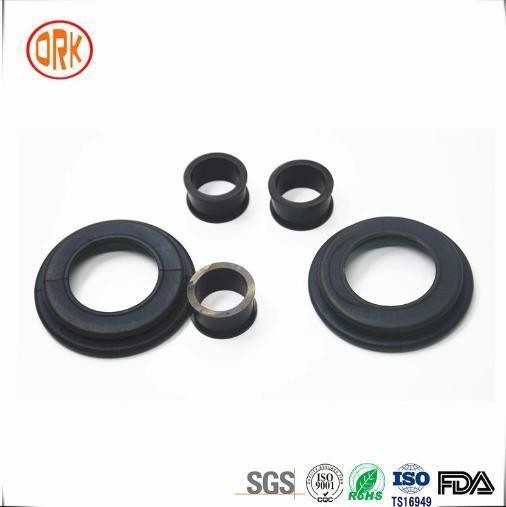
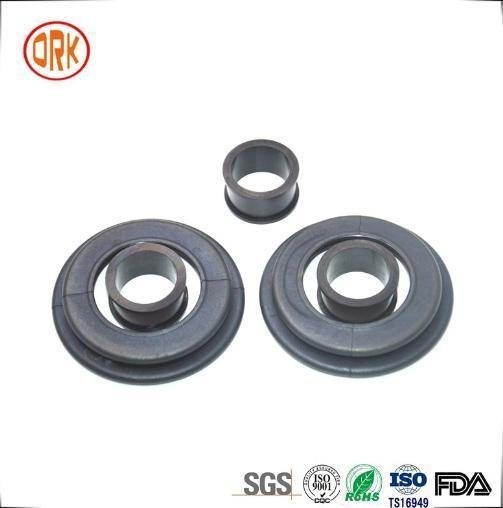
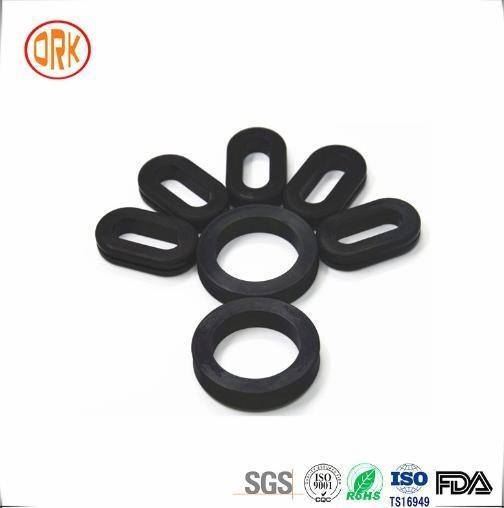
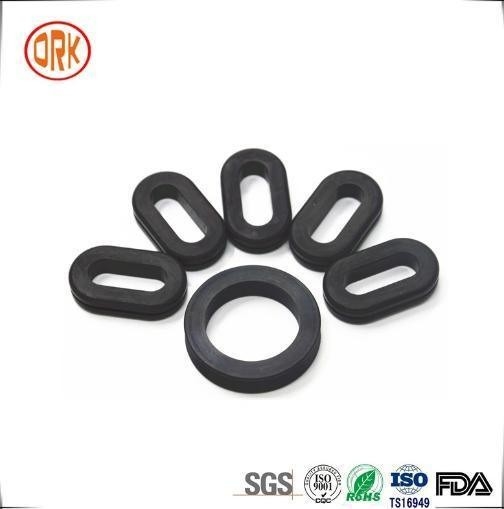
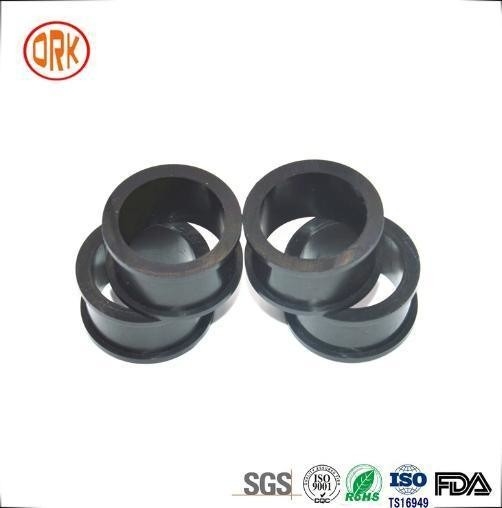
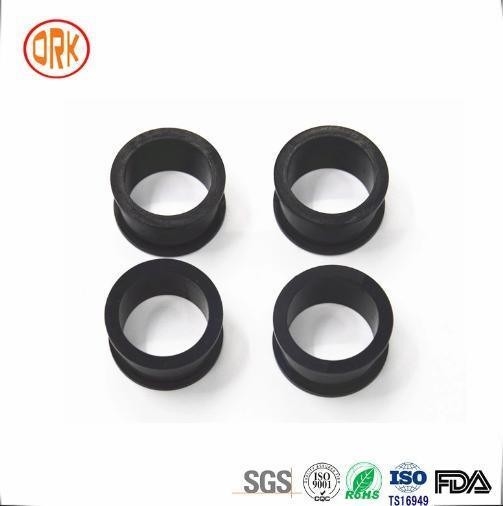
Tolerance Standard EPDM Valve Rubber Seal (Temperature Range -60°C to 350°C) Series Covers
Our EPDM valve rubber seal series covers are engineered to tight tolerance standards and deliver reliable sealing performance across an exceptionally wide temperature range of -60°C to 350°C. Manufactured from premium ethylene propylene diene monomer (EPDM) rubber, these covers offer outstanding resistance to steam, weathering, and a broad spectrum of chemicals, making them a dependable choice for demanding industrial and automotive applications.
Product Specifications
| Product Name | Tolerance Standard EPDM Valve Rubber Seal Temperature Minus 60 – 350 Degree Series Covers |
|---|
| Product Category | Rubber molded product |
|---|
| Material | EPDM, NR, SBR, Nitrile, Silicone, Fluorosilicone, Neoprene, Urethane (PU), Polyacrylate (ACM), Ethylene Acrylic (AEM), HNBR, Butyl (IIR), etc. |
|---|
| Size | All sizes and thicknesses available |
|---|
| Shape | Capable of all shapes as per drawing |
|---|
| Color | Natural, black, Pantone code or RAL code, or as per client's samples or requirements |
|---|
| Hardness | 30°–90° Shore A, usually 30°–80° Shore A |
|---|
| Surface Finishing | Polished (high polish, mirror polish), smooth, matt, powder coating, printing, electroplating, etc. |
|---|
| Drawing | 2D or 3D drawing in any image/picture format is acceptable |
|---|
| Free Sample | Yes |
|---|
| OEM/ODM | Available |
|---|
| Application | Household, electronics, vehicles (GM, Ford, Honda), machinery, hospital, petrochemical, aerospace, etc. |
|---|
| Market | Europe, North America, Oceania |
|---|
| Quality Certification | ISO9001, IATF16949, ISO14001, ISO45001, ISO 13485, FDA, REACH, ROHS, SGS, etc. |
|---|
| Quality Control | Every order receives more than 10 regular inspections and 5 random inspections by our professional QC team, or by a third party appointed by the customer. |
|---|
Mold & Tooling Capabilities
| Molding Process | Mold processing, extrusion |
|---|
| Mould Type | Processing mold, extrusion mold |
|---|
| Machines | 350T vacuum pressing machine and other pressing machines at 300T, 250T, and so on |
|---|
| Tooling Equipment | Rubber tension tester, rubber vulcanization instrument, durometer, calipers, ageing oven |
|---|
| Cavity | 1–400 cavities |
|---|
| Mould Life | 300,000–1,000,000 times |
|---|
Production Information
| Production Capacity | Each mold of product finished in 3 minutes, operating on 3 shifts within 24 hours |
|---|
| Mold Lead Time | 15–35 days |
|---|
| Sample Lead Time | 3–5 days |
|---|
| Production Time | Usually 15–30 days; to be confirmed before order |
|---|
| Loading Port | Guangzhou, Shenzhen, Shanghai, Ningbo, or as required |
|---|
EPDM Valve Rubber Seal (Ethylene Propylene) Selection Guide
EPDM valve rubber seals, or ethylene propylene valve rubber seals, belong to a family of synthetic elastomers offering low-cost steam and chemical resistance — particularly for applications involving solvents, acids, and other mild chemicals. Whether for water systems, braking systems, medical, pharmaceutical, food, or dairy use, you can count on ORK Rubber to deliver your valve rubber seals quickly and efficiently. Leverage the direct pricing power of the world's largest valve rubber seal inventory network and order EPDM valve rubber seals online today.
Common Names
EPDM, Ethylene Propylene Diene Monomer Rubber
Typical Applications and Products
Ethylene-propylene rubbers make up a family of synthetic elastomers characterized by excellent chemical and thermal resistance. EPDM materials are most commonly used in applications involving solvents, acids, brake fluids, and other aggressive chemicals. They are also known for resistance to high-temperature steam. EPDM has very poor compatibility with most mineral and petroleum-based oils and is seldom used in those applications.
Specialty Resistances
- Resistant to acids
- Resistant to bases
- Resistant to steam
- Resistant to greases
- Resistant to phosphate ester hydraulic fluids
- Resistant to weathering and sunlight
- Resistant to silicone oils
- Resistant to glycol brake fluids (DOT 3, 4, 5.1)
- Resistant to cleaning agents
- Resistant to ketones
- Resistant to brake fluids
- Resistant to some acids
- Resistant to steam below 300°F
Limitations
- Not resistant to alternative fuels
- Not resistant to common fuels
- Not resistant to mineral oils
- Not resistant to aliphatic hydrocarbons
- Not resistant to aromatic hydrocarbons
- Not resistant to petroleum oils
- Not resistant to concentrated acids
- Not resistant to halogenated solvents
- Not resistant to non-polar solvents
- Not resistant to kerosene
Mechanical Properties
| Compression Set Resistance | Good |
|---|
| Heat Stability | Good |
|---|
| Short-Term Resilience | Fair |
|---|
| Permeation Resistance | Good |
|---|
| Electrical Insulation | Excellent |
|---|
Certifications & Compliance Documents
We hold the following certifications: ISO 9001:2015, ISO 14001:2015, ISO 45001:2018, IATF, FDA, REACH, ROHS, and SGS, among others.
For color, we can manufacture to customer requirements. The table below shows the colorful O-rings we have produced. If you need colored O-rings, please provide your Pantone number.

Our Factory
- Since 2006, focused on rubber seals, especially for auto parts.
- Certificates: ISO9001, IATF16949, ISO14001, ISO45001, ISO 13485.
- Two factories covering more than 18,000㎡, including a 600㎡ clean room, with 300 workers.
- More than 10,000 sets of molds, including approximately 5,000 sets for O-rings.
- O-ring series cover American standard (AS568), Japanese standard (JIS), and national standard (GB), and we produce a large number of customized non-standard parts.
- Materials: NBR, FKM, SIL, EPDM, CR, NR, PU, HNBR, FFKM, SBR. The rubber materials used meet the requirements of ROHS2.0 and REACH235.
- Material certificates: FDA, ROHS, REACH, UL157, CP65, WRC, EN549, EN45545.
- Products are widely used in automotive parts, electronic connectors, valves, pneumatics, power tools, new energy, medical equipment, electronic products, and other fields.
- The company has introduced HRP, ERP, and other systems since its inception.
- Labor cost, raw material procurement, production process, and product quality are comprehensively and scientifically controlled.
Related Rubber Seal Products
We also produce automotive rubber seals, connector rubber seals, power tool rubber seals, valve rubber seals, pipe rubber seals, semiconductor rubber seals, hydraulic and pneumatic rubber seals, pump rubber seals, oil and gas seals, food-grade rubber seals, medical rubber seals, chemical equipment rubber seals, and more.
Production Progress
Quality Assurance
We provide high-quality, zero-defect products — this has been our production philosophy and belief. We perform ROHS and REACH testing, along with FDA, UL, SGS, and other certifications. Tolerances for moldings follow ISO 3302-1:2014(E).
Responsibility: We provide you with not just seals, but also service and technical support.
Cooperative Partners
Ruichen has cooperated with many superior customers. We have a complete system and excellent productivity to serve you.
International Exhibitions
Why Choose Ruichen?
Many large companies select Ruichen for their rubber seals and customized rubber parts because we consistently satisfy them in quality, price, delivery, and service. At the same time, we attach great importance to small customers in niche markets. Whether your purchase quantity is large or small, you are a valuable partner to us.
- High Quality: We continue to manufacture high-quality products for all customers and pursue 100% customer satisfaction, which has become one of our core competencies.
- Profession: We have rich experience in materials, products, and production, along with excellent international trade and language communication skills.
- Best Services: From quoting, sampling, production, and shipping to after-sales, our sales team will provide you with the best service so you can rest assured completely.
- 10,000+ Projects Delivered: Over 10,000 projects have been sent to customers worldwide in recent years, and we have received countless positive comments.
- Low Price: Our customers obtain maximum profits through our ISO management system and intelligent manufacturing, which continuously reduce our costs.
- Massive Capacity: Our in-house facilities allow us to complete your projects quickly. Thanks to our strong relationships with rapid materials partners, our capacity is not limited.
- Fast Delivery: Unlimited capacity, experienced engineers, and a flexible production system allow us to create your seals and production parts in a short period.
- 1,000+ Happy Customers: We aim to keep every customer happy with reliable quality, fast turnaround, and excellent service. We want all our new customers to become long-term customers.
Frequently Asked Questions
Q1: What kinds of materials can you provide?
NBR, EPDM, SILICONE, FKM, NEOPRENE (CR), HNBR, NR, IIR, SBR, ACM, AEM, Fluorosilicone (FVMQ), FFKM, etc.
Q2: How do I select the raw compound for my application?
With years of experience working with a variety of materials, we can help select the material that best suits your needs while keeping material costs in mind.
Q3: How long does it take to get a quote?
If your information is complete, we will provide a quotation within 8 hours.
Q4: Can you provide samples? Are they free or extra?
Yes, we can provide samples free of charge. Freight can be negotiated.
Q5: What is the normal lead time for product orders?
For stock items, generally 3–7 days; with mold, about 15–18 days; without mold, about 25–30 days, depending on the product situation.
Q6: How do you check the quality of the bulk order?
We perform incoming inspection to control raw material quality, process inspection to ensure production quality, and 100% full inspection before shipping. Automatic inspection machines provide full inspection, and pre-production samples can be provided according to customer needs before mass production.
Q7: What is your standard packing?
Plastic bags for inner packing and carton boxes for outer packing. Packing can also be done according to customer requirements.
Q8: What are your payment terms?
We accept T/T with 30% deposit and 70% balance against copy of B/L, or L/C at sight. PayPal is also accepted.
Silicone Rubber (Q, MQ, VMQ, PVMQ) Material Data
| Material | SIL (Silicone Rubber) |
|---|
| Advantages |
1. Excellent rebound resistance
2. Excellent oxygen and ozone resistance
3. Excellent weathering and heat resistance
4. Excellent heat and low-temperature resistance
5. Good heat insulation and heat dissipation
6. Good electrical insulation
|
|---|
| Disadvantages |
1. Poor aliphatic-solvent resistance
2. Poor alkaline resistance
|
|---|
| Temperature Range | -40°C to 220°C; -100°C to 250°C (special formula) |
|---|
| Applications |
1. Household appliance industry seals and rubber parts, such as electric kettles, electric irons, and microwave oven rubber parts.
2. Electronics industry seals and rubber parts, such as mobile phone keys, DVD shock pads, and cable joint seals.
3. Seals for products that contact the human body, such as water bottles and water dispensers.
|
|---|
Service Temperature: Silicone service temperatures range from -60°C to 225°C. Some special types can be used in extreme temperatures up to 300°C and down to -100°C.
Application: Silicone rubber performs well under environmental and temperature extremes. It is usually applied in automotive and aerospace industries where flexibility and longevity are important. It is also a suitable material for parts that need FDA approval for food handling equipment and appliances.
We can supply materials including NBR, FKM, SIL, EPDM, CR, NR, PU, HNBR, FFKM, ACM, SBR, FLS, and more.
Typical Features of Each Rubber Material
Silicone Rubber (Q, MQ, VMQ, PVMQ)
Service Temperature: Silicone service temperatures range from -60°C to 225°C. Some special types can be used in extreme temperatures up to 300°C and down to -100°C.
Application: Silicone rubber performs well under environmental and temperature extremes. It is usually applied in automotive and aerospace industries where flexibility and longevity are important. It is also a suitable material for parts that need FDA approval for food handling equipment and appliances.
NBR Rubber Features
Nitrile rubber (NBR, Buna-N) provides excellent resistance to petroleum oils as well as mineral and vegetable oils. Nitrile rubber also offers strong resistance to heat aging — often a key advantage over natural rubber. Nitrile rubber performs well in carburetor and fuel pump diaphragms, aircraft hoses, seals, and gaskets, as well as oil-lined tubing. Due to its versatility, nitrile is used in applications involving not only oil and fuel resistance but also those requiring resistance to heat, abrasion, water, and gas permeability.
EPDM Rubber Features
EPDM rubber is a high-density rubber primarily used for outdoor applications. It has dynamic and mechanical properties between natural rubber and synthetic rubber. Do not use EPDM if continual contact with petroleum-based products is required. Not recommended for food applications or those exposed to aromatic hydrocarbons.
HNBR Rubber Features
Hydrogenated Nitrile Butadiene Rubber (HNBR), also known as Highly Saturated Nitrile (HSN), is a special class of nitrile rubber (NBR) that has been hydrogenated to increase saturation of the butadiene segment of the carbon polymer backbone. Subsequent improvements to material properties over those of nitrile rubber (NBR) include greater thermal stability, broader chemical resistance, and greater tensile strength. HNBR is classified by ASTM as a DH-type polymer, indicating 150°C service temperature as well as less than 30% swell in IRM 903 oil. HNBR can be formulated to meet application temperatures ranging between -50°C and 165°C.
SBR Rubber Features
Styrene-butadiene rubber (SBR) is a general-purpose synthetic rubber produced from a copolymer of styrene and butadiene. Exceeding all other synthetic rubbers in consumption, SBR is used in great quantities in automobile and truck tires, generally as an abrasion-resistant replacement for natural rubber. It is widely used in the automobile, electrical appliance, and building vibration isolation industries — for example, in air blowers, water pumps, instruments, and ship measuring equipment. SBR has similar chemical and physical properties to natural rubber, with generally better abrasion resistance, outstanding strength, good creep and stress relaxation resistance, and low cost. It is not recommended for applications involving ozone, strong acids, oils, greases, fats, or most hydrocarbons.
Neoprene Rubber Features
Neoprene rubber, also known as polychloroprene, is an extremely versatile synthetic rubber with more than 75 years of proven performance. In the automotive world, neoprene is used for many under-the-hood and underbody parts that require a reasonably priced, mid-performance polymer with a good all-around balance of performance properties.
Natural Rubber Features
Natural rubber was originally derived from latex found in the sap of rubber trees. The purified form of natural rubber can also be produced synthetically. Natural rubber is an ideal polymer for dynamic or static engineering applications. Caution: Natural rubber is not recommended for applications where the rubber part will be exposed to ozone, oils, or solvents.
PU / Polyurethane Rubber Features
Polyurethane is an organic polymer formed by reacting a polyol (an alcohol with more than two reactive hydroxyl groups per molecule) with a diisocyanate or a polymeric isocyanate in the presence of suitable catalysts and additives. Polyurethane is widely used due to its superior strength, tear and abrasion resistance. It also provides excellent permeation resistance.
- Good hydraulic oil and gasoline resistance
- Resistant to pure aliphatic hydrocarbons (propane, butane, fuel)
- Resistance to mineral and silicone oils and greases
- Resistant to water, oxygen, ozone, and aging
- Excellent tear and abrasion resistance
- Available in multiple types and compounds to meet performance and cost requirements
Silicone Material Certifications
We hold the following certifications: ISO 9001:2015, ISO 14001:2015, ISO 45001:2018, IATF, FDA, REACH, ROHS, and SGS, among others.
For color, we can manufacture to customer requirements. The table below shows the colorful O-rings we have produced. If you need colored O-rings, please provide your Pantone number.
Additional Rubber Seal Categories
In addition to rubber gaskets for electronic home appliances and electric seals, we also produce rubber seals for automotive seals, oil and gas seals, coal mining machinery seals, electronic home appliances and electric seals, chemical equipment seals, artificial intelligence and new energy seals, refrigeration seals, aerospace seals, hydraulic and pneumatic seals, food-grade seals, valve and pipe seals, pump seals, and more.
<img class="pd-img" src="/photo/orksealing/editor/20240706173332_32545.jpg" alt="


 Your message must be between 20-3,000 characters!